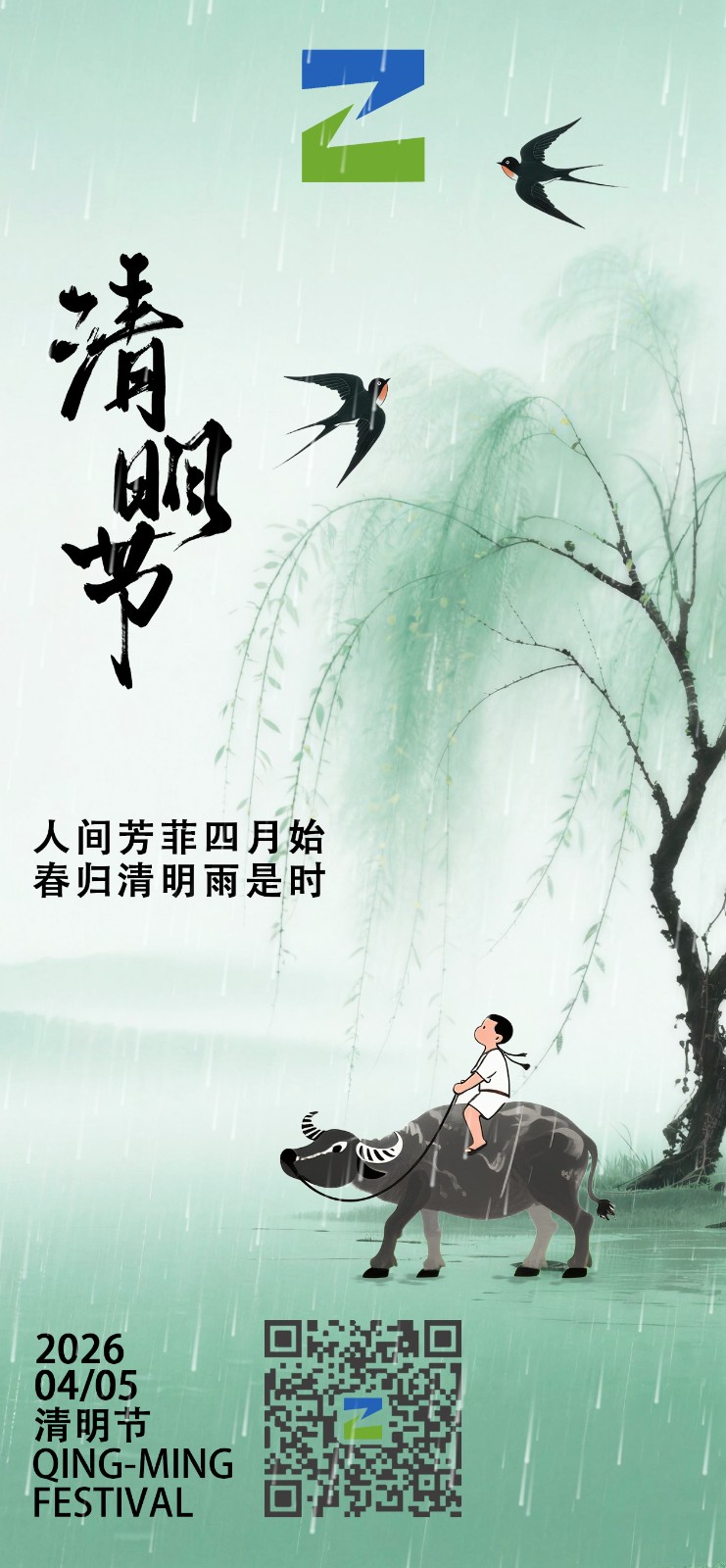
The Qingming Festival is one of the Twenty-Four Solar Terms. It falls between mid-spring and late spring, usually ranging from April 4 to 6 in the Gregorian calendar. Astronomically, it arrives fifteen days after the Spring Equinox when the handle of the Big Dipper points to the Ding position.
The Almanac records: “Fifteen days after the Spring Equinox, the Dipper’s handle points to Ding, marking Qingming. At this time, all things are pure, orderly and bright. The air is fresh, the scenery lucid, and all living things emerge into view — hence the name Qingming.”
Temperatures rise and rainfall becomes abundant in this season, breathing new life into all nature. It constitutes a critical time for spring ploughing and sowing. An ancient farming proverb goes, “Sow melons and beans around Qingming”, which vividly demonstrates the close bond between this solar term and agricultural production.
The Qingming Festival is the grandest traditional Chinese festival for ancestor worship. It embodies the cultural tradition of honouring forebears and cherishing the memory of ancestors. The festival encapsulates the Chinese national spirit, carries forward the sacrificial culture of Chinese civilisation, and expresses people’s moral sentiments of respecting ancestors and inheriting their aspirations.
Tomb-sweeping, also known as tomb worship, represents people’s seasonal reverence for ancestors. The custom of spring and autumn sacrificial rites has existed since ancient times.